
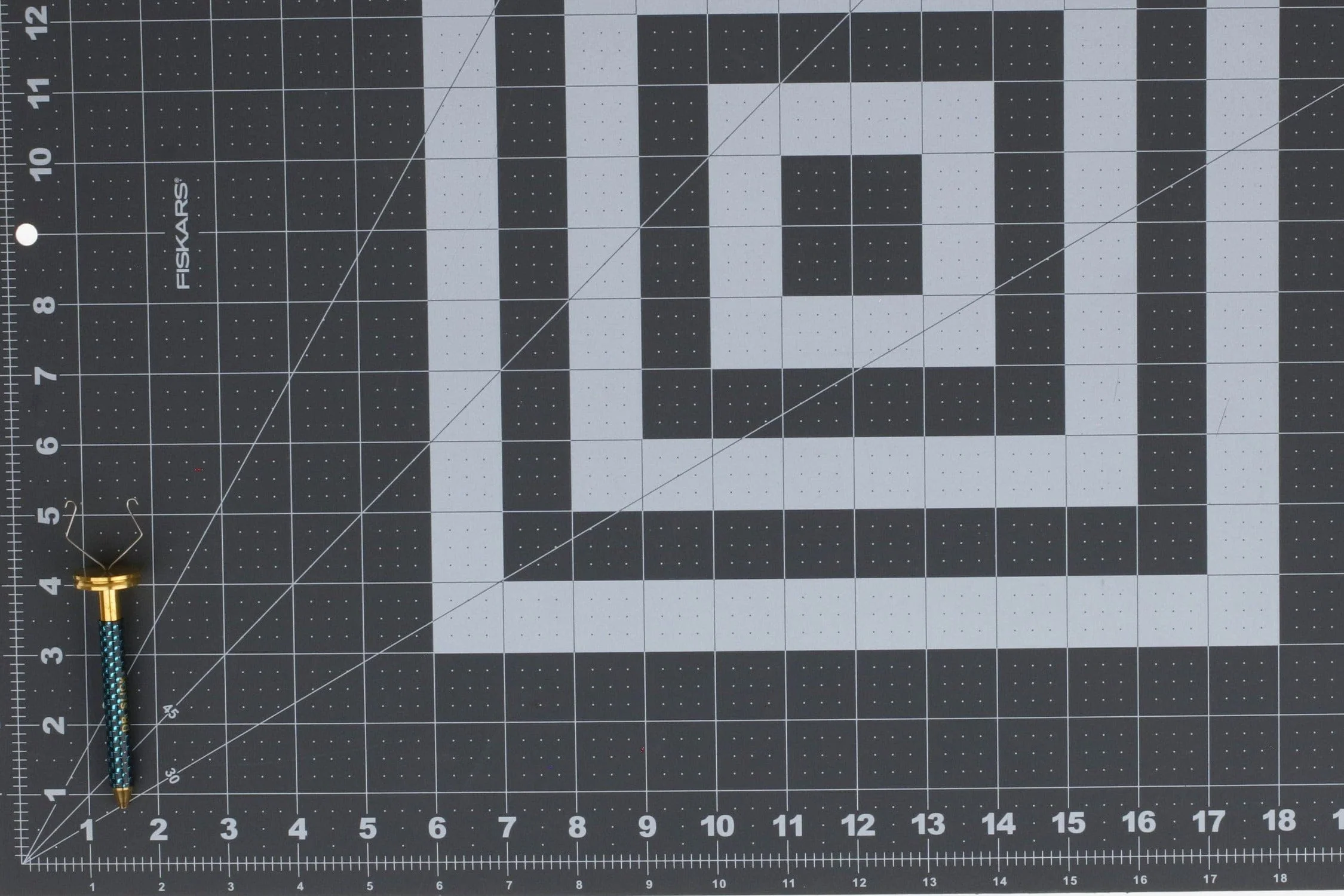
Dr. Slick Jumbo Carbon Fiber Dubbing Twister
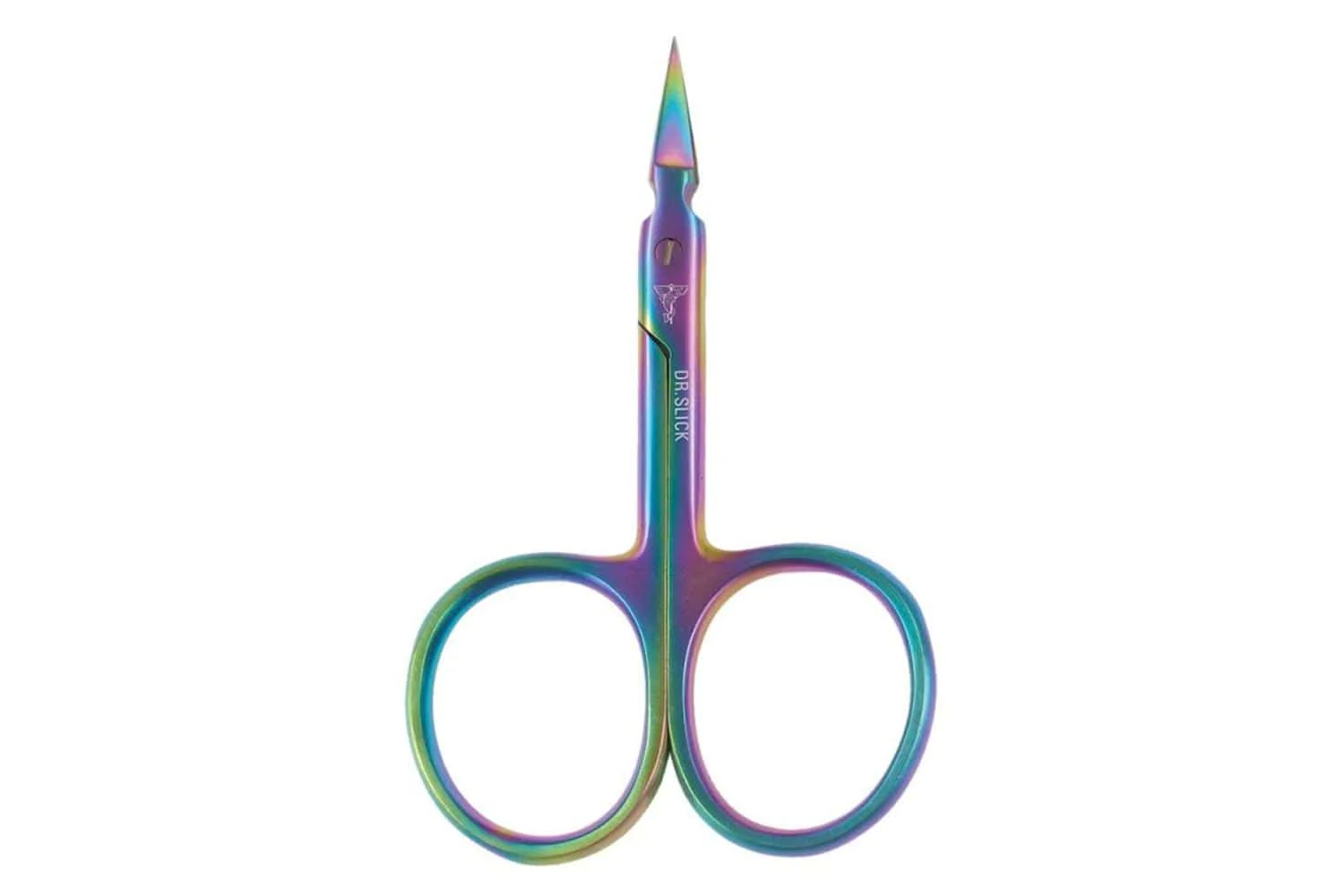
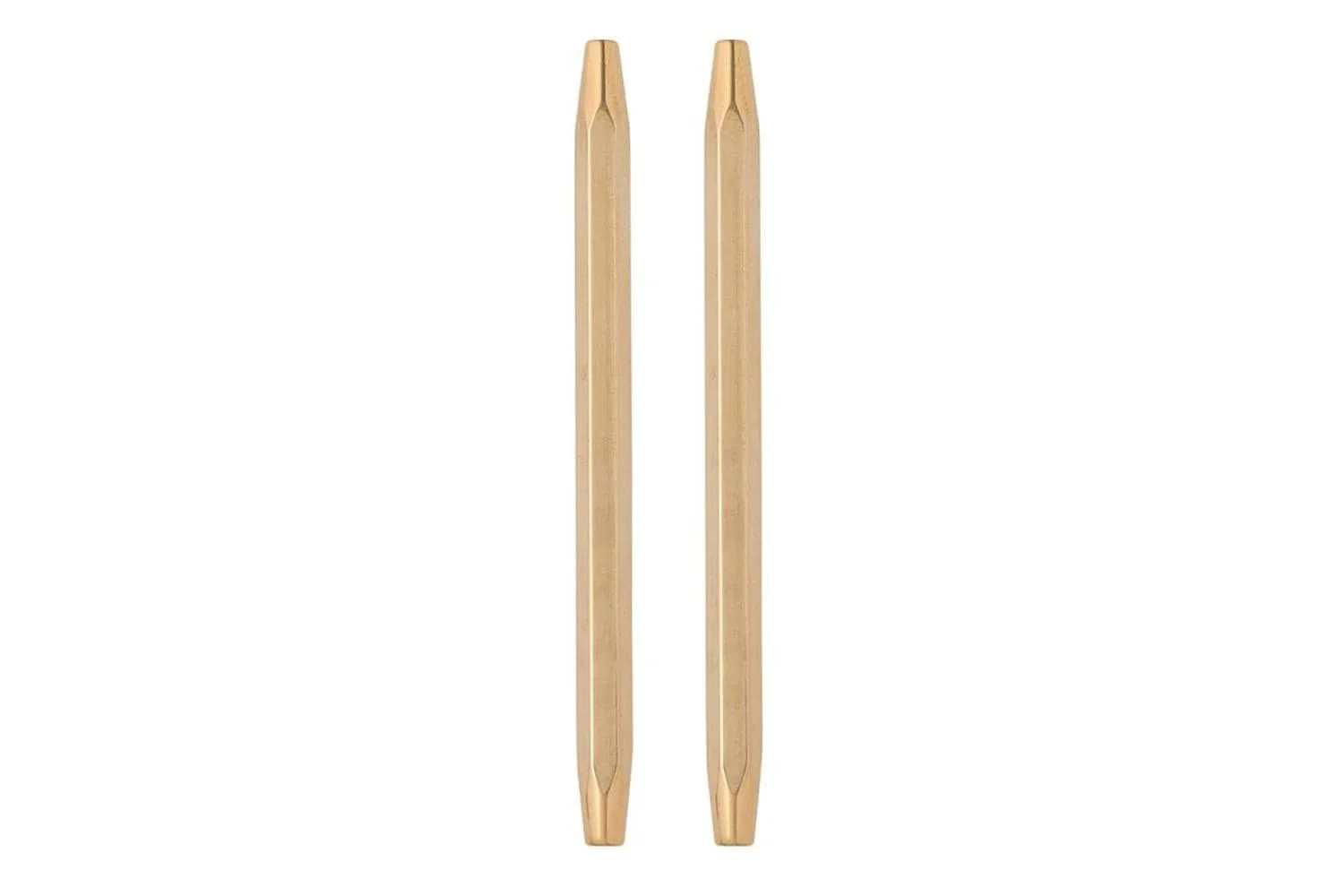
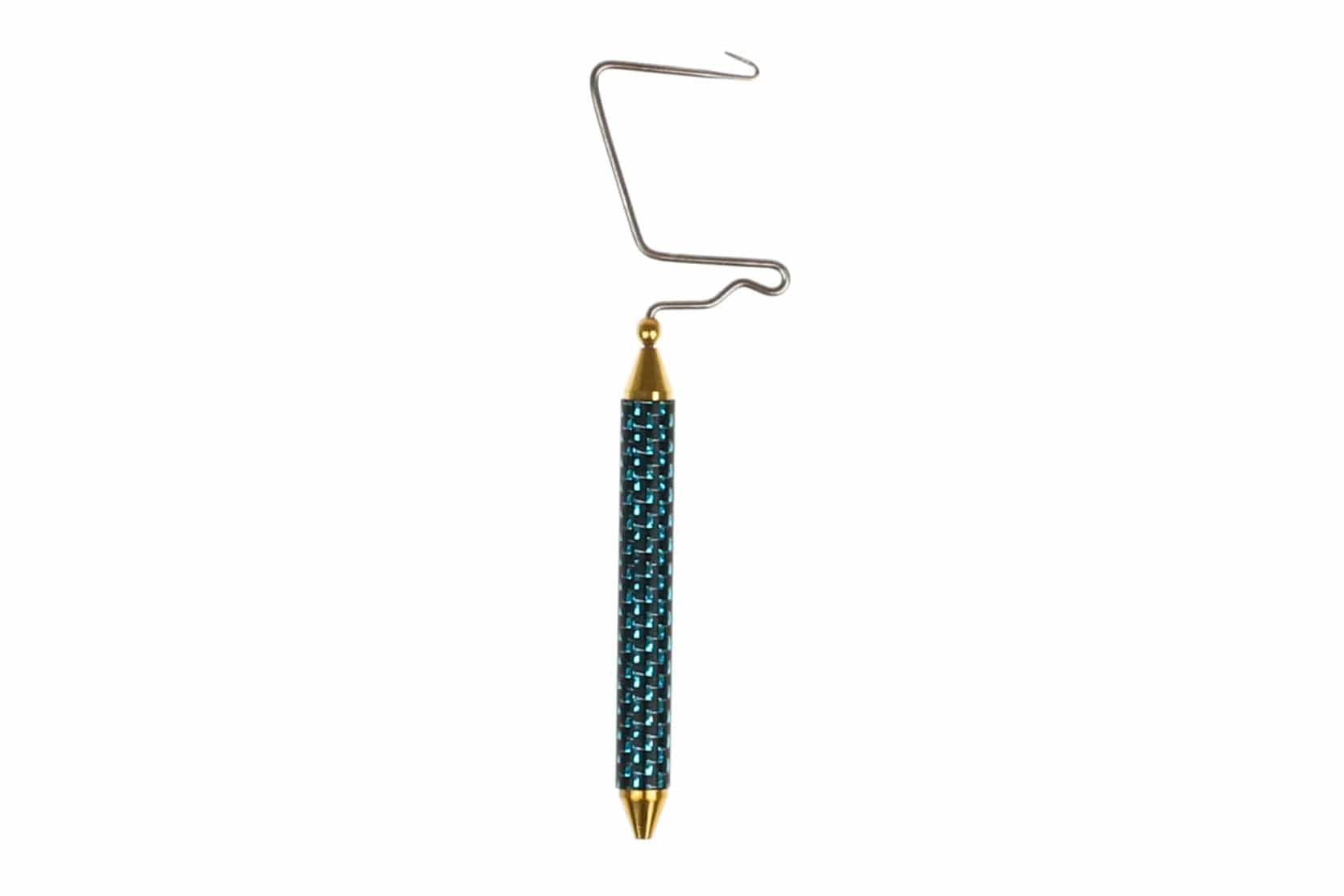
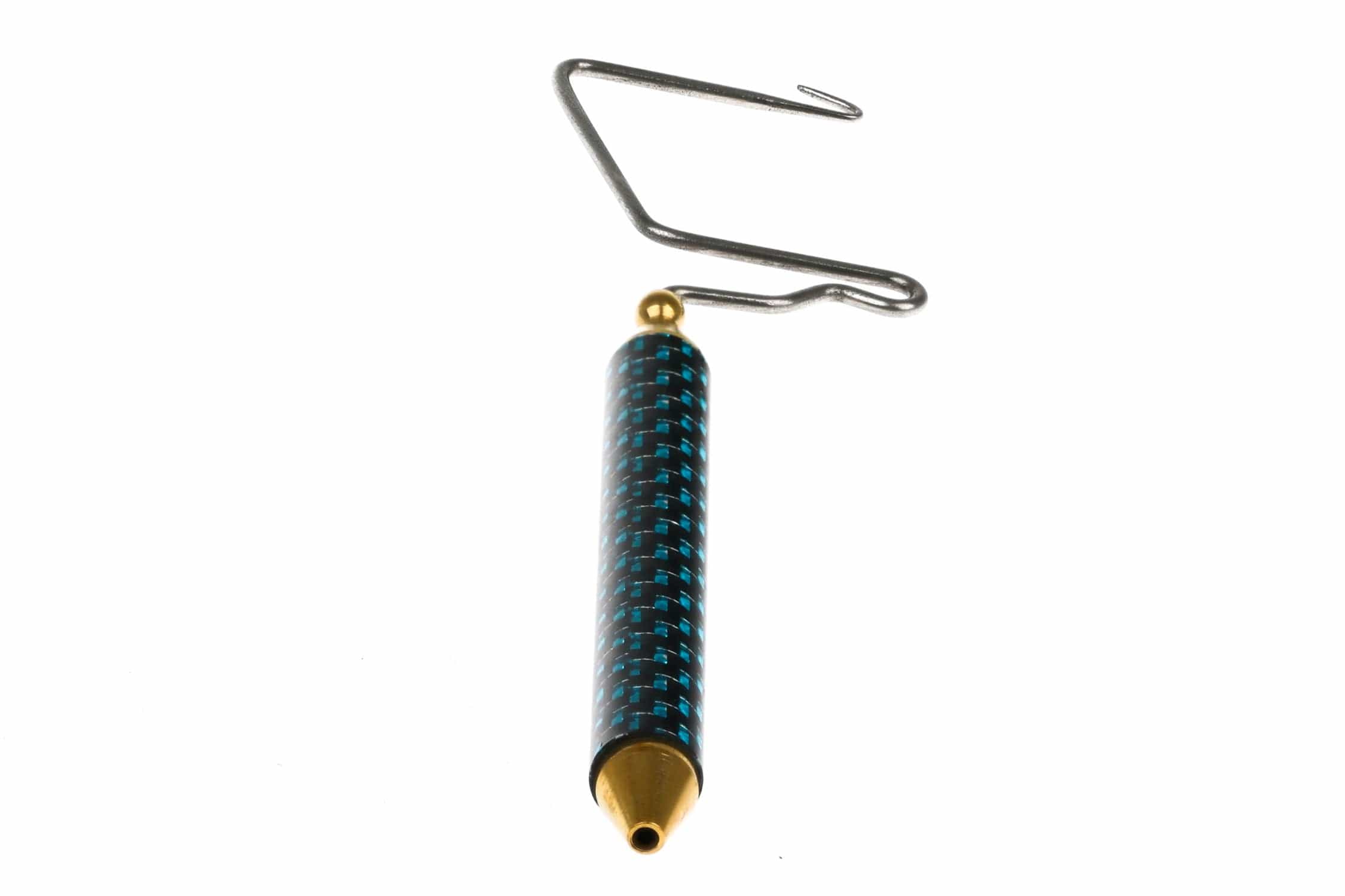
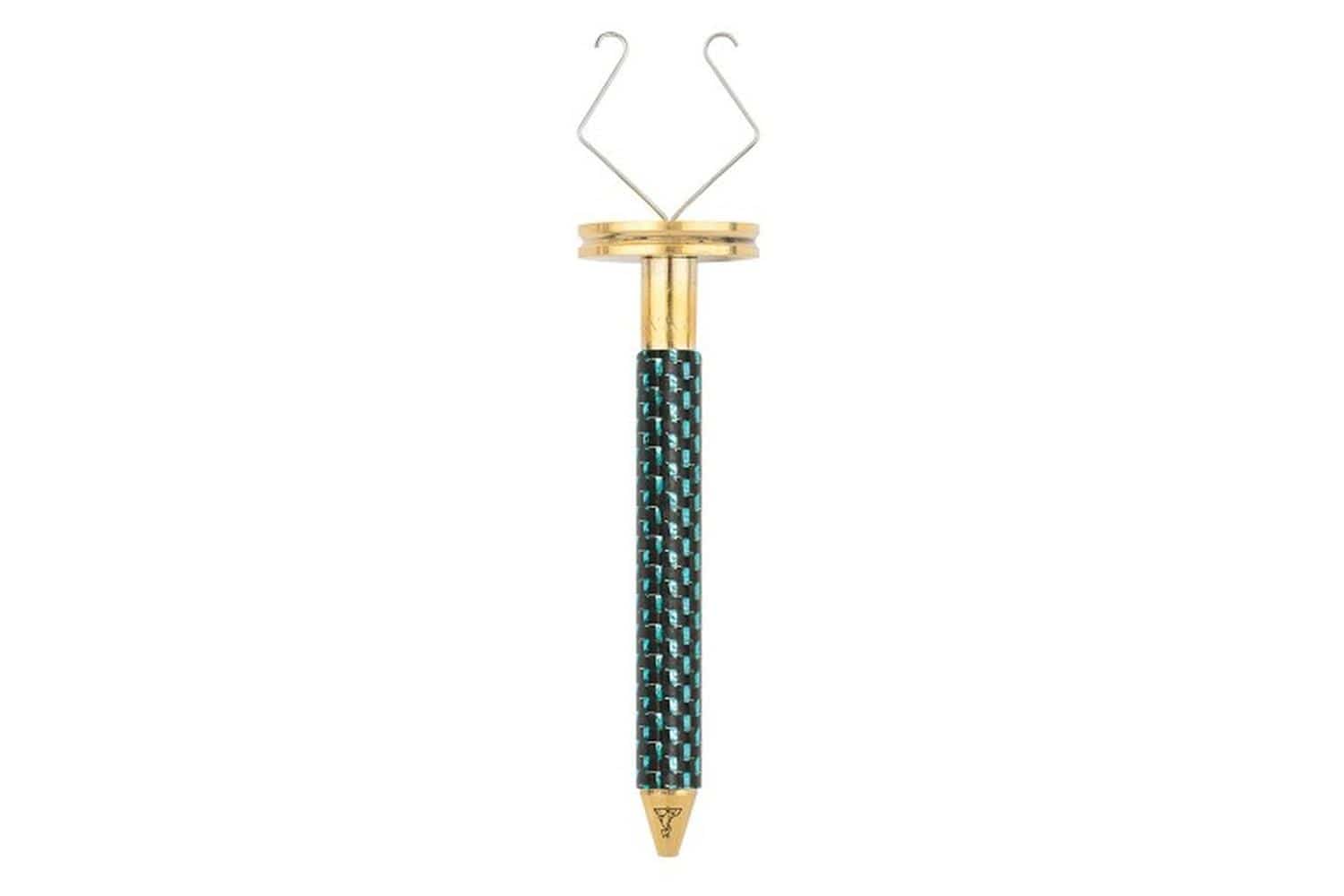
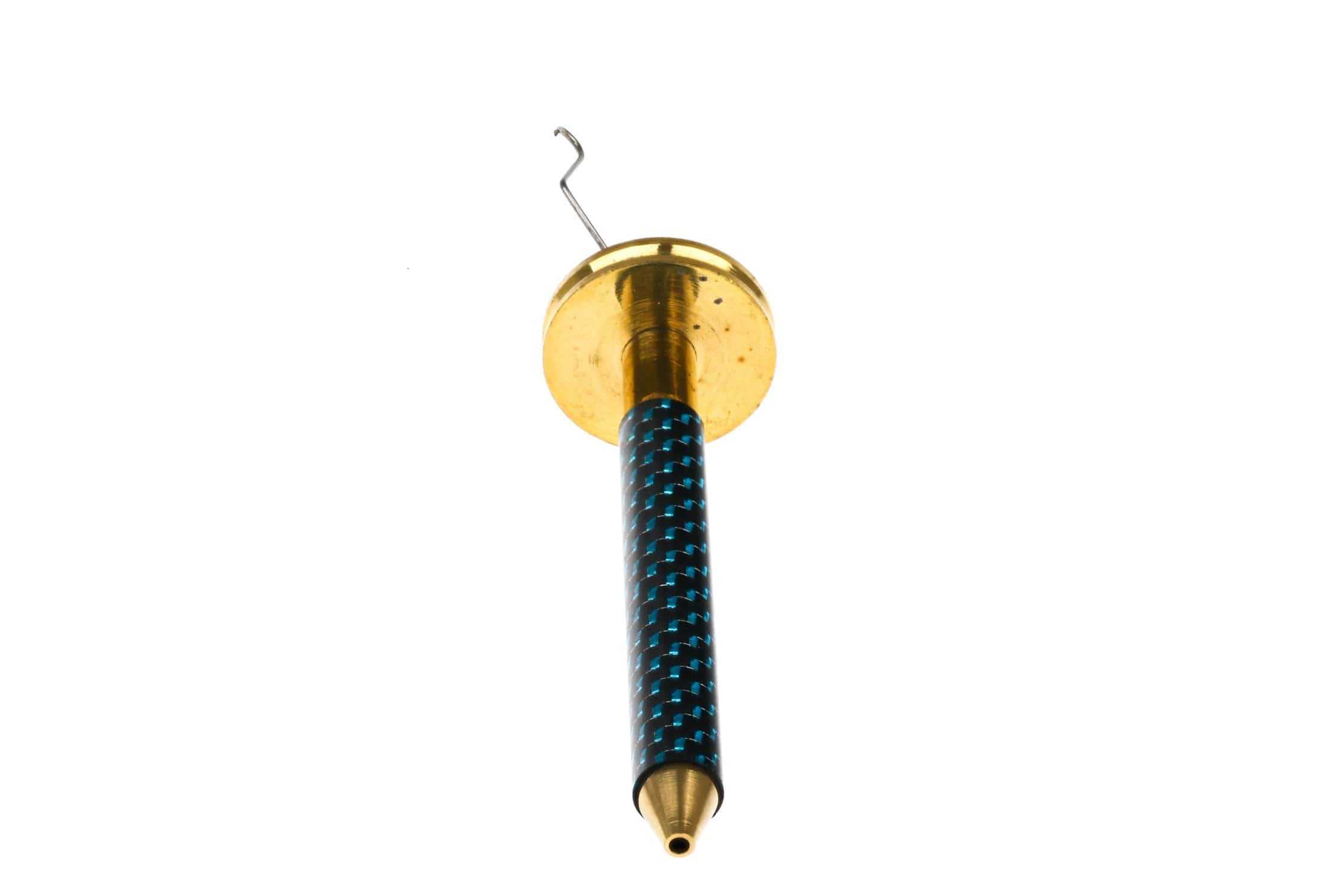
The Dr. Slick Jumbo Carbon Fiber Dubbing Twister is a specialized tool engineered for creating robust dubbing loops and brushes. Its design features a lightweight yet incredibly rigid carbon fiber shaft, which ensures there is no flex during the spinning process, even when working with dense, coarse materials. This central shaft is capped with two substantial brass weights that provide the necessary momentum for a fast, tight spin, transforming loose dubbing, herls, and flash into a durable, integrated rope for palmering onto a hook shank. The "Jumbo" designation refers to its larger size, making it particularly well-suited for building the bulky bodies and collars required for streamers, steelhead flies, and saltwater patterns.
This tool excels in managing complex "composite loops" where multiple materials like marabou, arctic fox fur, rubber legs, and flash are combined and spun together. The oversized, open hook at the base easily captures the thread loop, and the smooth-spinning mechanism allows the tyer to apply controlled tension. The result is a perfectly corded brush that can be wrapped to create buggy, durable bodies with a unique, multi-textured appearance. The balance between the light central axis and the heavy brass ends makes the spinning action both efficient and easy to control, preventing the thread from breaking while ensuring materials are locked securely in place.
Example Flies
Galloup's Dungeon: This articulated streamer relies on a large, bulky head and collar to push water, and a dubbing loop is the most effective way to build it. Tyers use a composite loop containing spun deer hair or Icelandic sheep fleece, combined with flash, to create a durable and full profile. The Dr. Slick Jumbo Twister has the size and momentum needed to spin these coarse, long-fibered materials into a tight brush that won't fall apart during casting or when fighting aggressive fish.
Intruder: A quintessential pattern for steelhead and salmon, the Intruder's construction is centered around dubbing loops. The rear station often features a spun body of Ice Dub or similar material, while the collar is a composite loop packed with ostrich herl, schlappen, and flashabou. The Jumbo Twister is ideal for controlling these long, wispy materials and spinning them into a dense, flowing shoulder that provides the fly's signature movement in the current.
Senyo's Laser Dub Minnow: The body of this popular baitfish pattern is formed by spinning Laser Dub, a fine synthetic fiber, in a dubbing loop. This technique creates a translucent, shaggy body that breathes in the water. The smooth, fast spin from the weighted twister helps to tightly cord the dubbing into a rope, which is then picked out to achieve the desired buggy and lifelike profile, a task for which this tool is perfectly suited.
Krystal Bugger: While a standard Woolly Bugger uses chenille, many modern variations use a dubbing brush to create a more durable and vibrant body. By placing Krystal Flash and a spiky dubbing like Arizona Simi Seal into a loop and spinning it with the twister, the tyer creates a custom chenille that is tougher and has more sparkle. This technique allows for precise color blending and material combination that pre-made chenille cannot offer.
Pats Rubber Legs: To build an exceptionally durable and buggy body for this heavy stonefly nymph pattern, tyers often use a dubbing loop filled with a coarse, spiky synthetic like Ice Dub or a custom blend. Spinning this material into a tight rope before wrapping the body ensures the fibers are locked in place and create a dense, leggy thorax. The Jumbo Twister's power and control make it easy to form a solid dubbing rope, which is essential for a fly designed to be bounced along rocky riverbeds.
How to Use
To use the Dr. Slick Jumbo Carbon Fiber Dubbing Twister, begin by forming a loop with your tying thread, typically two to three inches long, and securing it at the tie-in point. Place the hook of the dubbing twister into the bottom of the thread loop, allowing the tool to hang freely and apply tension. Next, apply a thin layer of dubbing wax to both strands of the thread loop. Insert your chosen dubbing material—be it natural fur, synthetic fibers, or chopped herl—sparingly between the two waxed strands of the loop. Once the material is distributed, give the knurled handle of the twister a sharp roll between your thumb and forefinger. The weighted brass ends will generate significant momentum, spinning the loop into a tight, durable rope known as a dubbing brush.
After the rope is formed to your desired tightness, you can proceed to wrap it forward on the hook shank, creating the body, collar, or thorax of the fly. Stroke the fibers rearward with each wrap to prevent trapping them under subsequent turns. Once you reach your tie-off point, secure the thread loop with several tight wraps of your bobbin thread, then snip off the excess loop and the dubbing twister. The resulting dubbed section will be incredibly secure and can be picked out with a bodkin or brush to create a buggier appearance.
Why We Like It
We like this tool for its superior engineering, which directly translates to better performance at the tying vise. The combination of a feather-light carbon fiber shaft and heavy brass counterweights is a deliberate design choice that optimizes the spinning action. This construction provides maximum rotational momentum with minimal effort, creating tighter and more consistent dubbing brushes than tools with a less balanced weight distribution. The rigidity of the carbon fiber shaft prevents any bending or flexing, which ensures all spinning energy is transferred directly to the thread loop, a critical factor when working with bulky materials for large predator flies.
Furthermore, its "Jumbo" size is not just for show; it provides enhanced ergonomics and functionality for specific tying applications. The larger frame and hook are easier to handle and are perfectly matched for building the composite loops required for modern streamers and intruder-style flies. This tool gives the tyer precise control over long and difficult materials like ostrich herl, Icelandic sheep, and various synthetic flashes, enabling the creation of durable, complex flies that would be frustrating to tie with a smaller, less efficient twister.
Comparable Tools
The primary alternative to the Dr. Slick Jumbo Carbon Fiber Dubbing Twister is a standard, all-metal wire twister, often made from a single piece of bent brass or steel wire. While functional, these basic twisters lack the specialized design features of the Dr. Slick model. Standard wire twisters are typically heavier overall but lack the strategically placed counterweights, resulting in a slower, less powerful spin that requires more effort from the tyer. Their thin wire construction can also flex under the tension of a heavily loaded dubbing loop, leading to less consistent results. In contrast, the Dr. Slick tool's rigid carbon shaft and weighted ends provide a faster, more stable spin, and its dedicated handle is more ergonomic for prolonged tying sessions.
Original: $18.00
-65%$18.00
$6.30Product Information
Product Information
Shipping & Returns
Shipping & Returns
Description
The Dr. Slick Jumbo Carbon Fiber Dubbing Twister is a specialized tool engineered for creating robust dubbing loops and brushes. Its design features a lightweight yet incredibly rigid carbon fiber shaft, which ensures there is no flex during the spinning process, even when working with dense, coarse materials. This central shaft is capped with two substantial brass weights that provide the necessary momentum for a fast, tight spin, transforming loose dubbing, herls, and flash into a durable, integrated rope for palmering onto a hook shank. The "Jumbo" designation refers to its larger size, making it particularly well-suited for building the bulky bodies and collars required for streamers, steelhead flies, and saltwater patterns.
This tool excels in managing complex "composite loops" where multiple materials like marabou, arctic fox fur, rubber legs, and flash are combined and spun together. The oversized, open hook at the base easily captures the thread loop, and the smooth-spinning mechanism allows the tyer to apply controlled tension. The result is a perfectly corded brush that can be wrapped to create buggy, durable bodies with a unique, multi-textured appearance. The balance between the light central axis and the heavy brass ends makes the spinning action both efficient and easy to control, preventing the thread from breaking while ensuring materials are locked securely in place.
Example Flies
Galloup's Dungeon: This articulated streamer relies on a large, bulky head and collar to push water, and a dubbing loop is the most effective way to build it. Tyers use a composite loop containing spun deer hair or Icelandic sheep fleece, combined with flash, to create a durable and full profile. The Dr. Slick Jumbo Twister has the size and momentum needed to spin these coarse, long-fibered materials into a tight brush that won't fall apart during casting or when fighting aggressive fish.
Intruder: A quintessential pattern for steelhead and salmon, the Intruder's construction is centered around dubbing loops. The rear station often features a spun body of Ice Dub or similar material, while the collar is a composite loop packed with ostrich herl, schlappen, and flashabou. The Jumbo Twister is ideal for controlling these long, wispy materials and spinning them into a dense, flowing shoulder that provides the fly's signature movement in the current.
Senyo's Laser Dub Minnow: The body of this popular baitfish pattern is formed by spinning Laser Dub, a fine synthetic fiber, in a dubbing loop. This technique creates a translucent, shaggy body that breathes in the water. The smooth, fast spin from the weighted twister helps to tightly cord the dubbing into a rope, which is then picked out to achieve the desired buggy and lifelike profile, a task for which this tool is perfectly suited.
Krystal Bugger: While a standard Woolly Bugger uses chenille, many modern variations use a dubbing brush to create a more durable and vibrant body. By placing Krystal Flash and a spiky dubbing like Arizona Simi Seal into a loop and spinning it with the twister, the tyer creates a custom chenille that is tougher and has more sparkle. This technique allows for precise color blending and material combination that pre-made chenille cannot offer.
Pats Rubber Legs: To build an exceptionally durable and buggy body for this heavy stonefly nymph pattern, tyers often use a dubbing loop filled with a coarse, spiky synthetic like Ice Dub or a custom blend. Spinning this material into a tight rope before wrapping the body ensures the fibers are locked in place and create a dense, leggy thorax. The Jumbo Twister's power and control make it easy to form a solid dubbing rope, which is essential for a fly designed to be bounced along rocky riverbeds.
How to Use
To use the Dr. Slick Jumbo Carbon Fiber Dubbing Twister, begin by forming a loop with your tying thread, typically two to three inches long, and securing it at the tie-in point. Place the hook of the dubbing twister into the bottom of the thread loop, allowing the tool to hang freely and apply tension. Next, apply a thin layer of dubbing wax to both strands of the thread loop. Insert your chosen dubbing material—be it natural fur, synthetic fibers, or chopped herl—sparingly between the two waxed strands of the loop. Once the material is distributed, give the knurled handle of the twister a sharp roll between your thumb and forefinger. The weighted brass ends will generate significant momentum, spinning the loop into a tight, durable rope known as a dubbing brush.
After the rope is formed to your desired tightness, you can proceed to wrap it forward on the hook shank, creating the body, collar, or thorax of the fly. Stroke the fibers rearward with each wrap to prevent trapping them under subsequent turns. Once you reach your tie-off point, secure the thread loop with several tight wraps of your bobbin thread, then snip off the excess loop and the dubbing twister. The resulting dubbed section will be incredibly secure and can be picked out with a bodkin or brush to create a buggier appearance.
Why We Like It
We like this tool for its superior engineering, which directly translates to better performance at the tying vise. The combination of a feather-light carbon fiber shaft and heavy brass counterweights is a deliberate design choice that optimizes the spinning action. This construction provides maximum rotational momentum with minimal effort, creating tighter and more consistent dubbing brushes than tools with a less balanced weight distribution. The rigidity of the carbon fiber shaft prevents any bending or flexing, which ensures all spinning energy is transferred directly to the thread loop, a critical factor when working with bulky materials for large predator flies.
Furthermore, its "Jumbo" size is not just for show; it provides enhanced ergonomics and functionality for specific tying applications. The larger frame and hook are easier to handle and are perfectly matched for building the composite loops required for modern streamers and intruder-style flies. This tool gives the tyer precise control over long and difficult materials like ostrich herl, Icelandic sheep, and various synthetic flashes, enabling the creation of durable, complex flies that would be frustrating to tie with a smaller, less efficient twister.
Comparable Tools
The primary alternative to the Dr. Slick Jumbo Carbon Fiber Dubbing Twister is a standard, all-metal wire twister, often made from a single piece of bent brass or steel wire. While functional, these basic twisters lack the specialized design features of the Dr. Slick model. Standard wire twisters are typically heavier overall but lack the strategically placed counterweights, resulting in a slower, less powerful spin that requires more effort from the tyer. Their thin wire construction can also flex under the tension of a heavily loaded dubbing loop, leading to less consistent results. In contrast, the Dr. Slick tool's rigid carbon shaft and weighted ends provide a faster, more stable spin, and its dedicated handle is more ergonomic for prolonged tying sessions.